
The lace around the neck of my dress scratched every time I moved.
I kept slipping two fingers beneath the collar, trying to pull it away from my skin without anyone noticing. It never worked. The lace settled right back where it had been, stiff against my neck. The harder I pulled, the more aware I became of everyone standing around the kitchen table looking at me. I remember wishing they wouldn't.
My fifth birthday cake sat in the middle of the table.
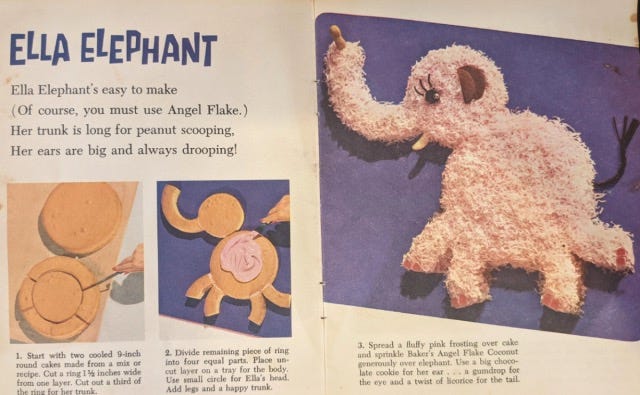
It was an elephant covered in coconut. I remember the smell before I remember the elephant itself. Coconut and cigarette smoke hung together in the air, sweet and heavy.
The adults smiled, waiting for the birthday girl to smile back.
I couldn't.
My friend Dawn stood beside me holding my hand. She looked at the cake, then back at me.
"Do you like it?"
I looked at her and answered without thinking.
"My Mum likes it."
I don't remember blowing out the candles. I don't remember who sang Happy Birthday or what anyone said after that. What I remember is Dawn's hand around mine, the lace scratching my neck, the smell of coconut, and a question I didn't know belonged to me.
A few months ago I found the recipe for that cake in an old Australian cookbook online. The elephant was called Ella. Seeing the photograph startled me. The cake looked exactly as I remembered it. It was the conversation I hadn't expected to find.
I've wondered why that memory stayed with me when so many others disappeared.
Maybe it's because children usually know what they like. They have favorite colors and favorite cereals. They wear the same shirt because it's their favorite. They ask for the same bedtime story because they love hearing it again. Somewhere before my fifth birthday, I had stopped paying attention to what I liked and started paying attention to what my Mum liked.
Birthdays weren't really about me.
The decorations had been chosen by my Mum. The dress had been chosen by my Mum. Most of the presents were clothes my Mum had picked out. I didn't know birthdays could be an expression of the child. I thought they were another expression of the parent.
There was one present that was different.
I'd wanted a Baby Alive doll for months. I talked about it often enough that Dawn's mum bought it for me. I still remember lifting it out of the wrapping paper and feeling something I couldn't have named then.
Someone had listened.
After everyone went home, my Mum placed the doll on the top shelf of my closet. She said it would be too messy to play with.
Sometimes I'd climb into that closet with a book and read. Every now and then I'd look up at the doll still sitting in its box above me, just to make sure it was there.
One day it wasn't.
I don't remember asking where it went.
I wonder why.
Maybe I already understood that wanting something didn't mean getting to keep it. Maybe I'd already learned that questions didn't change the outcome. Or maybe memory has simply left that part behind.
I don't know.
What I do know is that the first thing I remember choosing for myself wasn't something I loved.
It was something I rejected.
My Mum loved coconut.
So I decided I didn't.
I'm still not sure whether I ever disliked the taste. I only know that it became the first of many quiet decisions. After coconut came colors, music, hairstyles, makeup, clothes, and eventually almost anything that felt like it might become part of me. If I discovered my Mum liked something, I'd quietly move away from it. Sometimes I'd catch myself liking the same thing she did and feel an unexpected hesitation, as though enjoying it might erase some part of myself.
I watched my Mum carefully.
Most children watch their parents to learn who they are. I watched mine to learn who I hoped I wouldn't become.
It took me years to realize that even when I was choosing the opposite of my Mum, I was still letting her decide where I began.
By the time I reached junior high, my body had become another place where her preferences lived. She dressed me in the clothes she wished she felt confident enough to wear herself. Mini skirts. Tight jeans. Clothes that never felt like mine. Friends would lend me oversized sweaters, and I'd change into them at their home, then change back before I went home.
Looking back, I don't think I was changing clothes.
I was trying on myself.
When I left for university, nobody knew who my Mum thought I should be.
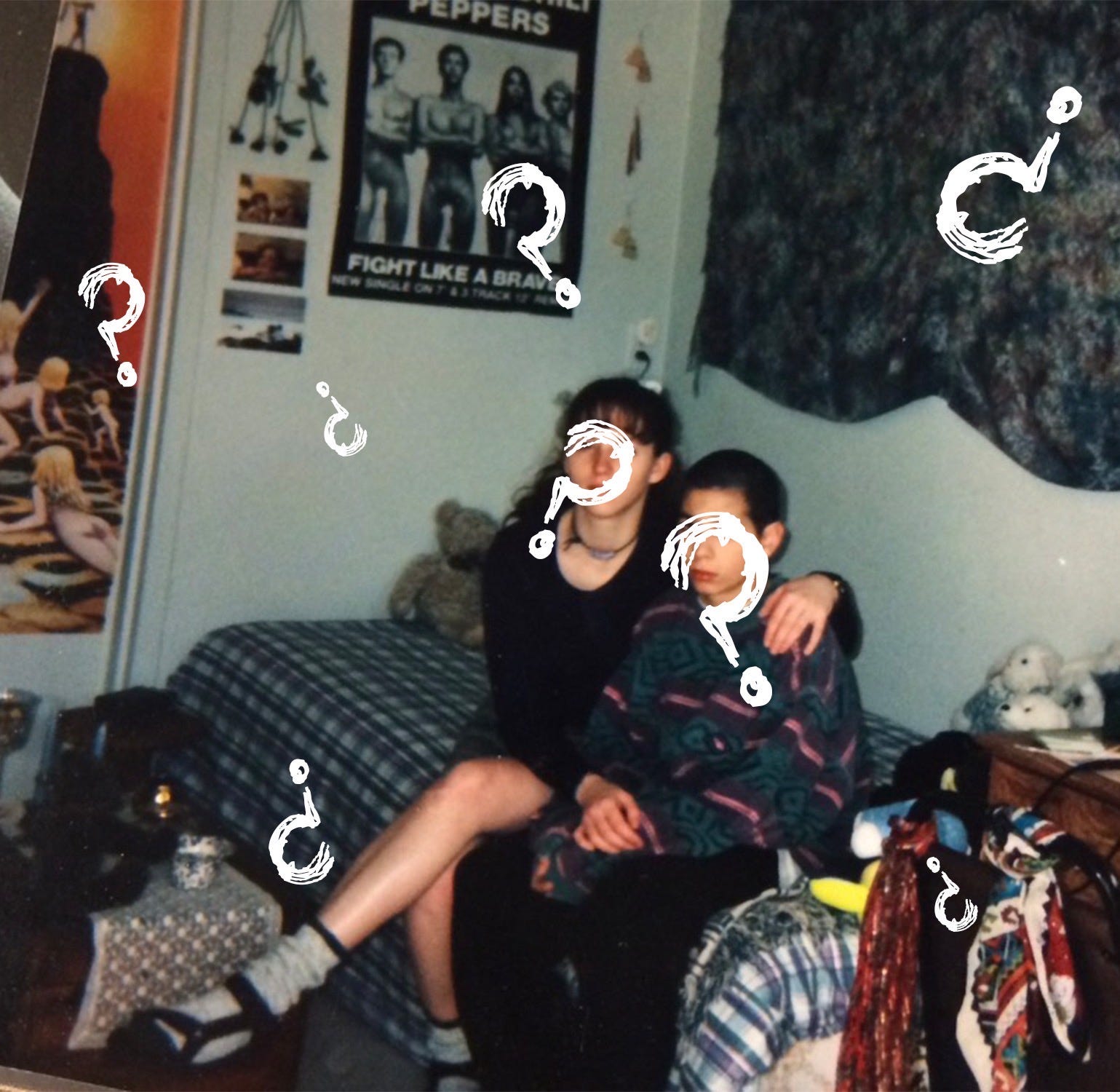
My dorm room was tiny, but it felt enormous. I wandered through thrift stores collecting things that caught my eye. A Led Zeppelin poster hung on the bathroom door. A piece of batique fabric hung on the wall next to my bed. Above my bed was a Red Hot Chili Peppers poster that read Fight Like a Brave. I burned incense almost every evening until the room smelled like sandalwood in an attempt to remove the memories of cigarette smoke that seemed to be forever stuck in my head. I left my door open when I studied, and people wandered in without knocking. We'd sit on the floor talking until two in the morning about families, dreams, fear, love, and the lives we hoped we'd have. Looking back at that room now, I don't notice the posters first.
I notice that every single thing in it was there because I had chosen it.
One night my friend Neha knocked on my door in tears. Her parents were still living in India, and her father had threatened to send her home after she'd done poorly on a paper. He wanted her to become a doctor. She wanted to become a teacher.
We sat on my bed until the sun came up.
I don't remember trying to tell her what she should do. I remember wanting to understand what she wanted. Looking back, I wonder if that was the first time I understood how much of a person's life can be shaped by someone else's dream for them.
For a long time I thought becoming myself meant becoming my mother's opposite.
Then I realized something she loved had quietly stayed with me.
Janis Joplin's version of Me and Bobby McGee.
It's one of the only memories I have of my Mum smiling. She'd turn the music up, cigarette between her fingers, and dance around the kitchen. For a few minutes she looked lighter than she ever did the rest of the day. I loved watching her then.
For years I skipped that song whenever it came on.
Then one day I caught myself singing along.
I didn't turn it off.
Maybe that's what changed. Becoming yourself isn't learning to reject everything you've been given. It's learning that you're allowed to choose. Some things you'll leave behind. Some things you'll carry with you.
The difference is that the answer finally belongs to you.
Sometimes I think about Dawn and wonder if she remembers standing beside me, holding my hand while everyone else watched. I wonder if she remembers asking whether l liked my birthday cake, or if it was simply a question that slipped into the noise of an ordinary afternoon. She probably thought she was asking about the elephant.
It took me years to answer.
So interesting that your mother didn’t let you have the doll you wanted and she treated you like the doll she wanted, dressing you in clothes that scratched or were uncomfortable for you in other ways. Strong writers like you use sensory details like that scratching collar. I felt that so physically, as did anyone who’s ever endured such a thing. And this: “Coconut and cigarette smoke hung together in the air, sweet and heavy.” Those scents are so specific, and I would never think of them belonging together, which says so much, both physically and metaphorically. And the crawling into a closet to read is so relatable. It’s what the quiet kids do, right? I still have the urge to do that when I look at my bedroom closet. I live alone, in a home where I’m safe, yet still feel that urge.
Dang. Sometimes my kids will want to play with a birthday toy and I’ll say the same thing. Eventually we will and I like to think I’m doing a good job otherwise, but it’s an eye opener at the same time. You really have a way with words and this story feels like something that will stay with me for a long time. Thanks for writing it, I think the message is powerful and can legitimately change people future behavior. Who knows it may have just changed mine.